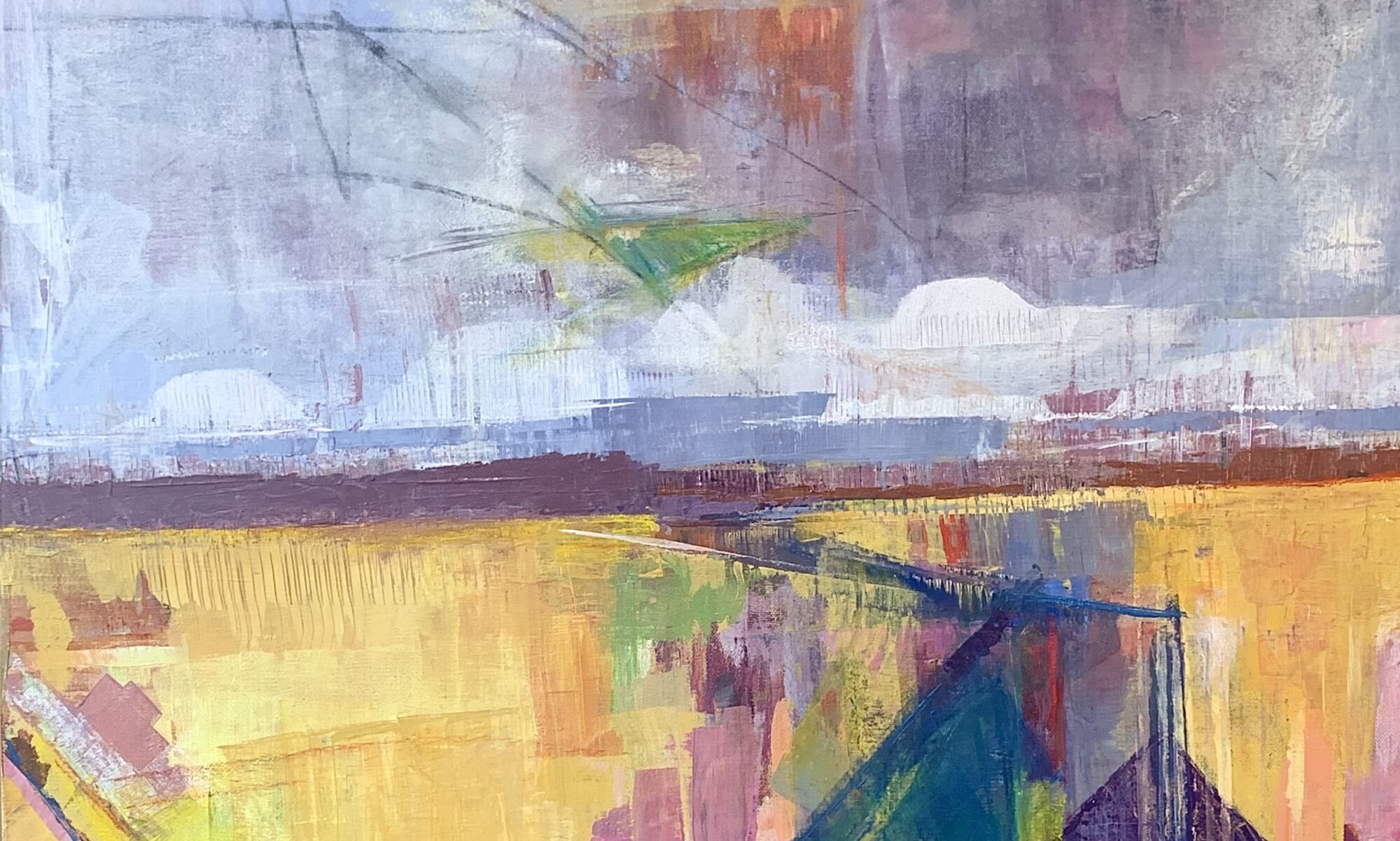
Art the Redeemer

I am rereading some of my college texts, including Jacques Barzun’s “Use and Abuse of Art”.  I just finished reading the section, “Art the Redeemer”.  This section goes into a long conflicted discussion on how art has historically been tied to religion, how it is immaterial and often transcendental, etc.  I want, however, to comment specifically on the last paragraph, which can apply to my own work.  At the end, Barzun says that art fails at redemption, that it can simply not go deep enough into us.  He quotes Van Gogh,

There is something else in life besides pictures, and that something else one neglects, and Nature seems to revenge itself, and fate is set on thwarting us. (96)

In his very last statement, Barzun makes the connection,

That my be in our time why art has been tempted to borrow the panoply of science. (96)

One could argue, though Barzun does not go this far, that in modern times as science has replaced religion as our hope and salvation, art has simply followed the leader.  My college thesis could have used this thought.  In any case, it is certainly an interesting point.  I do not know that anything can truly redeem us, or if there is such thing as redemption, but I have always believed that art, like science and religion, can take us to a place that is bigger then ourselves.

A Stormy Day in Chicago

I went to Chicago today to drop off “Leaning In” at the Morpho Gallery for a show.  I took this opportunity to visit Chicago’s River North neighborhood and gallery hop a bit.  The drive down there consisted of bumper to bumper traffic, severe storms, and hail.  When I finally did arrive, I was able to view a half dozen or so galleries between downpours.  The highlights of the day for my were the Ann Nathan Gallery and The Roy Boyd Gallery.  The work at these two galleries in particular really drew me in.  I usually don’t get a good vibe from the Ann Nathan Gallery, but Deborah Ebbers work is definitely up my alley so I had to investigate.  Her colors and handling of surface are beautiful. I like the texture she is able to create for her trees.  Also, I noticed, she paints around the branches similarly to the way I do in some works.

The Roy Boyd Gallery was a different kind of surprise.  I wandered in by chance and was greeted very warmly (not in the usual stuffy gallery sort of way).  The works were not something I would instantly be drawn to from a subject perspective, but these organic abstracts by Richard Gibbons were too rich to brush off.  At first glance I thought they may be gimmicky,  However, the rich surface, colors, and shimmering forms knocked me over.  The thing I puzzled about, however, was the fact that most of these works were done on multiple panels, in some cases displayed with spacing and in other cases not.  The choice of separate panels, and the placement of the edge felt intentional compositionally.  However logically, in regards to the subject, it felt  over complicated and unnecessary.  None the less, I tried to envision the work as seamless, without the breaks, and somehow it lost power.  I am utterly perplexed, and that is great.  I highly recommend seeing these.

Currently Reading

To get into the mindset of abstraction for an upcoming class, I picked up “Abstract Art” by Anna Moszynska.  Moszynska writes a very thorough and analytical history of abstraction and how different movements over the last century or so have implemented it.  I enjoy the ways in which Moszynska compares and contrasts different forms of abstraction.  In an enticing preface, Moszynska says,

“…to many artists, the distinction between representational and abstract art now seems meaningless, because their work daily brings them face to face with the fact that in certain essential ways all art is abstract; and equally, all art is representational, in that it represents something-if only an intention.” (9)

I suppose I have always found myself looking for someone to say this out loud.  As obvious as it may seem, in real practice it is easy to overlook.  Art often gets categorized by our attempts to describe it.  In doing so, “abstract” has come to be a term used for art that is a field of color, or simply shapes and colors.  This type of work, like Mondrian’s paintings for example, is now in a genre of “pure abstraction”, which is still arguable.  My point is that when I use abstraction to describe some of my own work I do so knowing that they are representational of trees, but I am searching for image and color beyond the subject, which I believe makes it both.